
A cheap small business website is not automatically bad. The risk is that the price may leave out the things that actually make the website useful.
Before you choose the cheapest option, check who writes the content, who connects the domain, who handles hosting, and what happens when you need edits.
Cheap can mean unfinished
Many low-cost website offers start with a nice-looking template. That can be fine, but a template still needs your services, photos, hours, contact buttons, local search setup, and clear calls to action.
- You may still have to write every page
- You may have to resize and place photos
- You may need to connect the domain yourself
- You may have to pay extra for forms or plugins
- You may not get help after launch
Questions to ask before buying
A cheap website becomes expensive when every normal business need turns into an add-on. Ask these questions before you commit.
- Is hosting included?
- Is SSL included?
- Are mobile layouts included?
- Are edits included?
- Can I cancel?
- Do I own my domain and content?
- Will the site have a real contact path?
When cheap is fine
If you enjoy building things yourself and only need a basic page, a cheap DIY option can work. It is less ideal when you are busy, unsure what to write, or need the site to look polished quickly.
What PageFront does differently
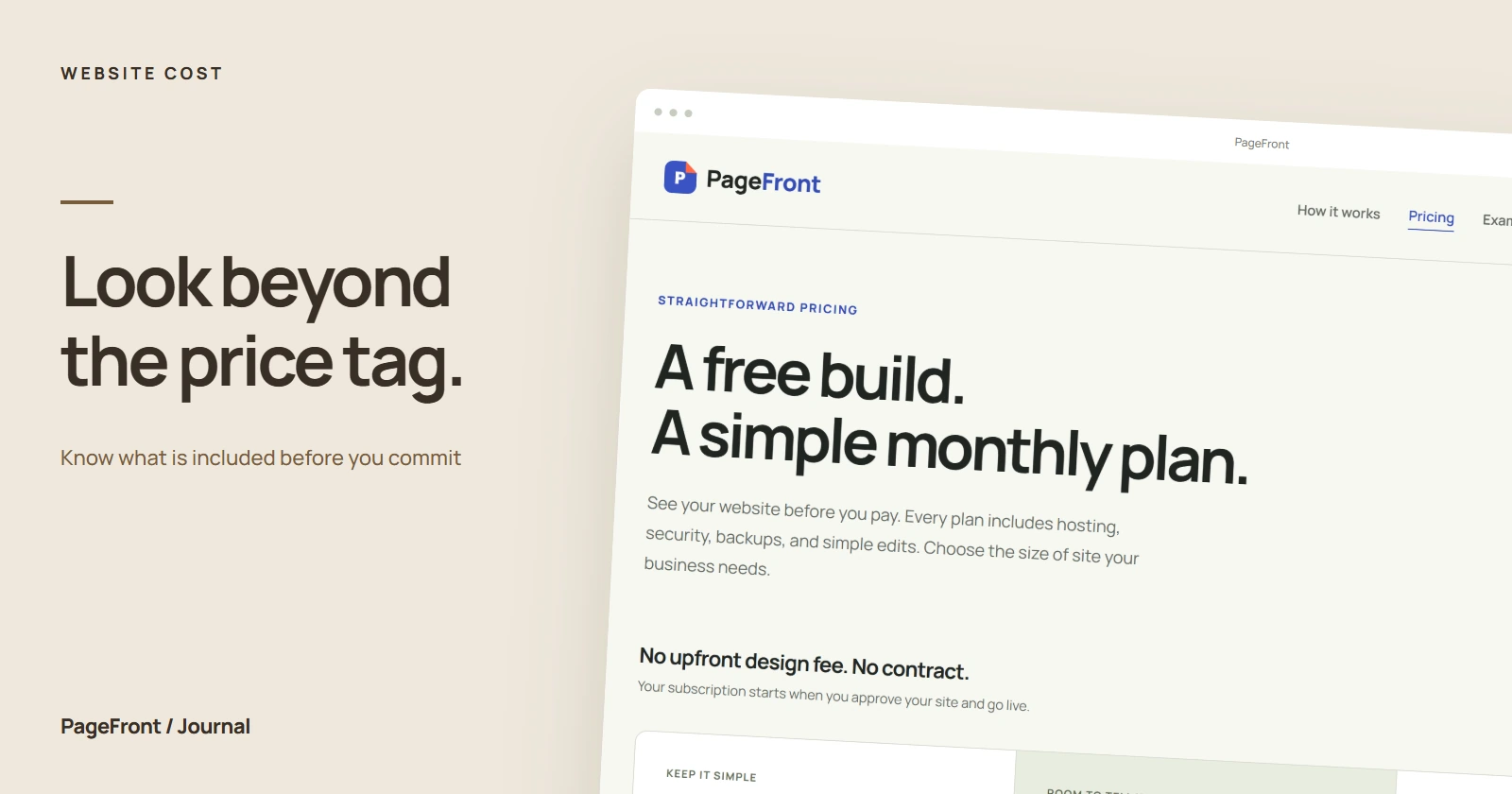
PageFront keeps the starting cost low without handing you a blank template. We build the draft first, then you decide whether to keep it live.
Want the simple path?
Send your business details and PageFront will build a free website draft. You decide if you want to keep it live.
Start your free website draft