
What Is a Landing Page?
A landing page is a focused web page that helps one type of visitor take one clear next step. For a small business, that might mean requesting an estimate, calling for service, or booking an appointment.
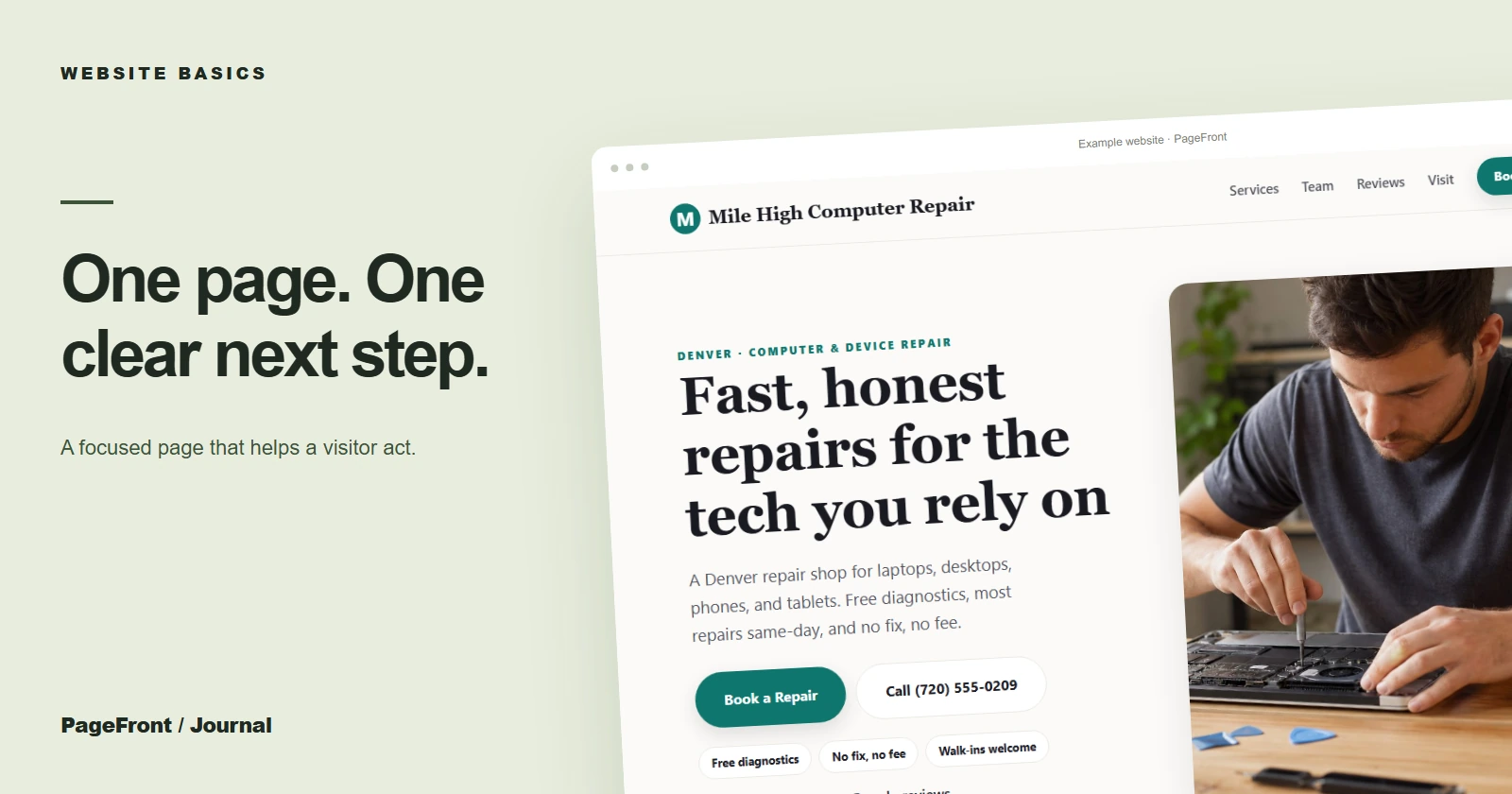
Think of a landing page as a helpful front door for a specific reason someone found you. A person who searches for emergency laptop repair, a wedding caterer, or a local roof inspection should arrive on a page that immediately matches that need. They should not have to hunt through a general website to work out whether you can help.
A landing page has one job
Most landing pages work best when they have a single main action. That does not mean the page has to be short or bare. It means each section supports the same decision: understand the offer, trust the business, and take the next step.
For example, a plumber could have a landing page for water-heater replacement. It could explain the service, show the area served, answer common questions, include local proof, and make requesting an estimate easy. That is more useful than sending every visitor to a homepage that tries to cover everything at once.
Landing page vs. homepage
Your homepage is the overview. It introduces the business, gives people a sense of what you do, and lets different visitors choose their own path. A landing page is more specific. It usually speaks to one service, one location, one audience, or one promotion.
Both can be valuable. If your website is new, start by making the homepage clear. Our guide to what a small business website should include covers the essentials. Then add focused pages when a service or customer question deserves more room.
What to include on a small business landing page
You do not need a complicated funnel. A solid landing page is simply clear, credible, and easy to use on a phone.
- A direct headline: Say what you offer and who it is for.
- Useful details: Explain the service, what is included, and any practical limits.
- Real proof: Add honest photos, reviews, qualifications, or examples of work.
- Local context: Make service areas, hours, and response expectations easy to find.
- One visible action: Give visitors an easy way to call, book, or request a quote.
When you are deciding what to say, focus on the questions a customer asks before they contact you. If you answer those clearly, the page feels more helpful and less like an ad. The same principle applies to your homepage, too.
When to create a landing page
Create one when you have a focused path worth supporting. That could be a core service, a seasonal offer, a paid ad, a new location, or a campaign aimed at a particular type of customer. If the page does not have a distinct purpose, it may be better as a section of an existing service page.
Keep the promise consistent from the link someone clicks to the heading they see. That small bit of continuity helps visitors feel they are in the right place, which gives them a reason to keep reading.
PageFront makes the first version simple
PageFront builds clear, professional websites for local service businesses. You can request a free website draft, review it on your own time, and decide later whether to keep it live. There is no upfront design fee, no contract, and no sales call. Plans start at $39 per month when you are ready to launch.
Start with a page that gives customers a clear next step.
Send your business details and we will build a free website draft for you to review on your own time.
Start your free website draftFrequently asked questions
What is the difference between a landing page and a homepage?
A homepage introduces the whole business and gives visitors several ways to explore. A landing page is narrower: it is built around one offer, service, audience, or action.
Does a small business need a landing page?
Not always. A clear homepage and service pages are the first priority. A landing page becomes useful when you have a specific service, campaign, location, or offer that needs one focused path.
What should a landing page include?
Include a clear headline, the service or offer, useful proof, practical details, and one obvious next step such as calling, requesting a quote, or booking.